
Understanding
Autism

When a family first hears the word “Autism”, it can feel like a language they don’t yet speak. At The Other Side, we believe that understanding is the first step toward true inclusion and advocacy.

Understanding
Autism

When a family first hears the word “Autism”, it can feel like a language they don’t yet speak. At The Other Side, we believe that understanding is the first step toward true inclusion and advocacy.

– What is autism?

A Different Way of Experiencing the World

Autism, or Autism Spectrum Disorder (ASD), is a lifelong developmental condition that affects how a person perceives the world and interacts with others.

Autism is not a disease to be cured; it is a different way of experiencing the world.
– The spectrum explained

More Like a Colour Wheel Than a Straight Line

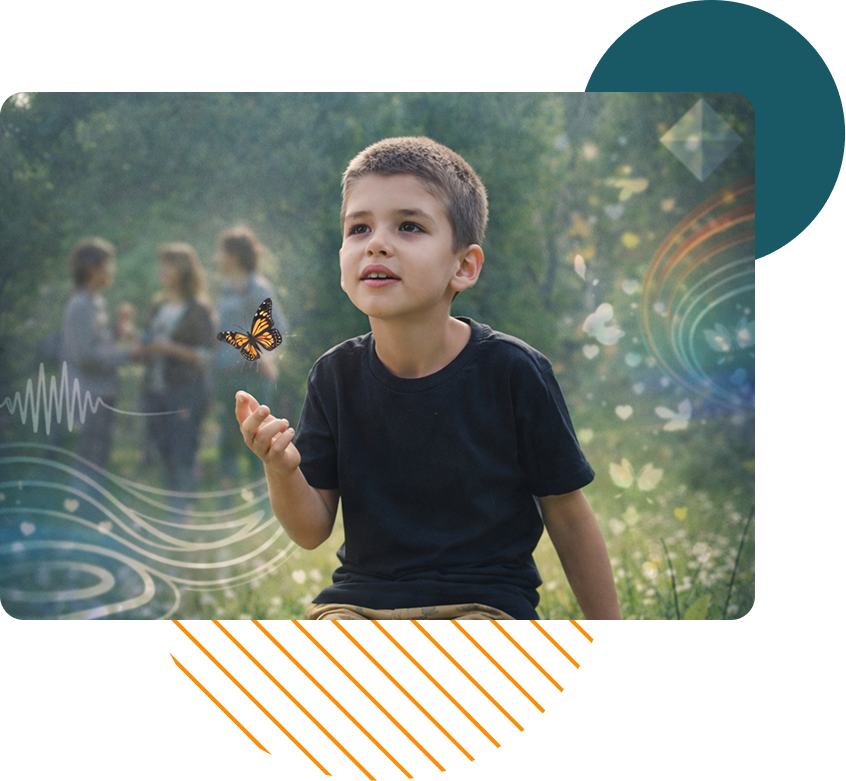
People often think of a spectrum as a straight line from “mild” to “severe”. However, it is more like a colour wheel. Every individual—like our sons, Ewald and Estiaan, has a unique mix of strengths and challenges.

Communication

Some may be non-verbal, while others have a vast vocabulary but struggle with the “social rules” of conversation.

Sensory Processing

The world can be “too loud” or “too bright”. Sights, sounds, and textures that others ignore can feel overwhelming to an autistic person.

Social Interaction

Reading facial expressions or understanding sarcasm can be like trying to read a book in a language you haven’t fully mastered.

Routine & Repetition

Familiarity brings safety. Repetitive movements (stimming) or strict routines are often a way to find calm in a chaotic world.

– A faith-based perspective

Fearfully and
Wonderfully Made

“I praise you because I am fearfully and wonderfully made.”
Psalm 139:14

  • Divine Design: An autistic brain is not a “mistaken” brain. It is a masterpiece of God’s diverse creation.

  • Unique Purpose: God has a specific plan for every individual on the spectrum. They often see the beauty, the detail, and the truth in ways that “typical” people miss.

  • The Church’s Role: Our calling as a church community is not just to “tolerate” autism, but to celebrate it and adapt our hearts to be a true home for these families.

– Common myths vs. reality

Replacing Assumptions With Understanding

The Myth The Reality
Autistic people don’t feel emotions or empathy. Many autistic people feel emotions very deeply, but they may express them differently than others expect.
Autism only affects children. Autism is lifelong. Autistic children grow into autistic adults who continue learning and developing.
All autistic people are the same. Autism is a spectrum. Every individual has a unique combination of strengths, challenges, and abilities.
If someone can speak well, they can’t be autistic. Autism affects more than speech. Social communication, sensory processing, and routines can still be challenging even for very verbal individuals.
Meltdowns are bad behaviour. Meltdowns are usually a response to sensory or emotional overload, not intentional misbehaviour. Compassion and support are needed in those moments.
Autism is something “wrong” that needs to be fixed. Autism is a different way the brain works. With understanding and support, autistic individuals can thrive and contribute meaningfully to the world.
Autism means something went wrong in God’s design. We believe every person is fearfully and wonderfully made. Autism is part of the beautiful diversity of God’s creation.
The Myth
Autistic people don’t feel emotions or empathy.
The Reality
Many autistic people feel emotions very deeply, but they may express them differently than others expect.
The Myth
Autism only affects children.
The Reality
Autism is lifelong. Autistic children grow into autistic adults who continue learning and developing.
The Myth
All autistic people are the same.
The Reality
Autism is a spectrum. Every individual has a unique combination of strengths, challenges, and abilities.
The Myth
If someone can speak well, they can’t be autistic.
The Reality
Autism affects more than speech. Social communication, sensory processing, and routines can still be challenging even for very verbal individuals.
The Myth
Meltdowns are bad behaviour.
The Reality
Meltdowns are usually a response to sensory or emotional overload, not intentional misbehaviour. Compassion and support are needed in those moments.
The Myth
Autism is something “wrong” that needs to be fixed.
The Reality
Autism is a different way the brain works. With understanding and support, autistic individuals can thrive and contribute meaningfully to the world.
The Myth
Autism means something went wrong in God’s design.
The Reality
We believe every person is fearfully and wonderfully made. Autism is part of the beautiful diversity of God’s creation.

– How you can support a family

Grace Without Judgment

If you know a family walking this path, the best thing you can offer is grace without judgment.

  • Ask, don’t assume: Every child is different. Ask the parents how you can best interact with their child.

  • Be a safe space: If a child is having a difficult sensory moment, offer a kind smile or a helping hand rather than a stare.

  • Pray with us: Pray for the strength of the parents and the flourishing of the children.

“When you’ve met one person with autism, you’ve met one person with autism.”
— Dr. Stephen Shore

– Frequently asked questions

Understanding Is a Journey

Understanding autism is a journey of continuous learning. Here are some of the most common questions we encounter, answered with the heart of our family’s experience.

Autism is referred to as a spectrum because it affects every person differently. It isn’t a straight line from “low” to “high” functioning. Instead, think of it as a collection of different traits—such as sensory processing, communication, and social skills—where each person has their own unique strengths and challenges.

It is both. While autism brings a beautiful and unique perspective to the world, it is also a developmental disability because the world is often not built for the way an autistic brain processes information.

This is often called “stimming” (self-stimulatory behaviour). It might look like flapping hands, rocking, or repeating a favourite phrase. It is often a natural and helpful tool for regulation, sensory coping, or joy.

A tantrum is usually goal-oriented behaviour. A meltdown is an involuntary physical response to sensory or emotional overload. In those moments, what is needed isn’t discipline, but safety, quiet, and a patient presence.

The greatest gift you can give is acceptance without judgment. Don’t feel you have to fix the situation. A simple “I’m here if you need a coffee or a chat” goes a long way.

For many autistic individuals, the world feels unpredictable and overwhelming. A strict routine acts as an anchor. Knowing what is happening next provides safety and reduces anxiety.

We don’t believe so. The future may look different than what society typically expects, but it is by no means limited. With the right support, every child can reach their God-given potential.

Our faith tells us that we are never alone. On hard days, we lean on the truth that God’s strength is made perfect in weakness, and we see His faithfulness in every small breakthrough.

Walk This
Journey With Us

Understanding grows through compassion, patience, and grace. Let this page be a starting point for deeper empathy and stronger community.

Walk This Journey With Us

Understanding grows through compassion, patience, and grace.
Let this page be a starting point for deeper empathy and stronger community.